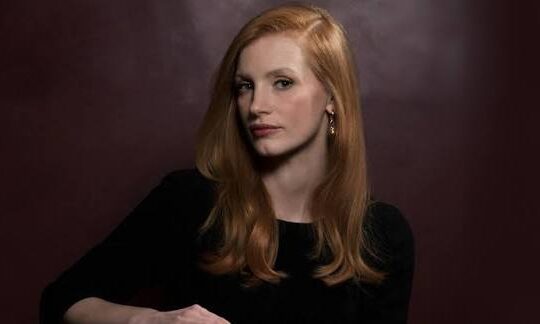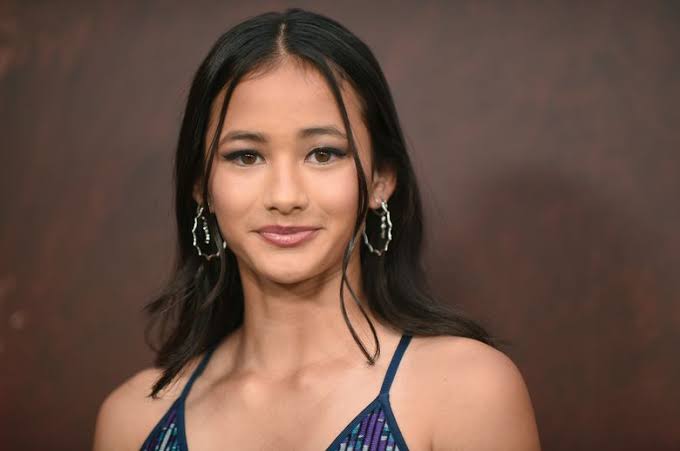
There’s a scene that a lot of people remember from Godzilla vs. Kong — a young girl named Jia, orphaned and quiet, standing in front of a creature the size of a building, using her hands instead of her voice to say what words never could. That girl was played by Kaylee Hottle, and on July 21, 2026, at just 18 years old, she died following a car crash in Frederick County, Maryland.
It’s the kind of news that stops you mid-scroll. Someone who felt so alive on screen, someone so young, gone in an instant on an ordinary night that should have ended in nothing more than a drive home.
A Girl Who Was Never Meant to Be “Representation” — She Just Was Herself
Kaylee was born into a family where American Sign Language wasn’t something learned for a role — it was her first language, spoken across four generations on her father’s side. Long before Hollywood found her, she was simply a kid from Kyle, Texas, who happened to communicate with her hands the way most of us do with our voices.
She got her start young, appearing in a public service announcement for a video-calling app built for the deaf and hard-of-hearing community when she was only nine. By 2021, she’d landed the role of Jia in Godzilla vs. Kong — and three years later, reprised it in Godzilla x Kong: The New Empire. She wasn’t cast to check a box. She brought something to Jia that no hearing actor could have: a quiet, lived-in authenticity that made an impossible monster movie feel, in its own strange way, deeply human.
She once talked about how her classmates reacted to seeing her on the big screen — that it was exciting for them to watch a friend up there, sharing the frame with Kong. It’s a small, ordinary detail, but it says everything about who she was: a teenager who happened to do something extraordinary, without ever losing the ordinary parts of herself.
The Night That Took Her
According to the Frederick County Sheriff’s Office, Kaylee was one of two passengers in a car that went off the road and struck a culvert in Ijamsville before 3 a.m. Excessive speed is believed to have been a contributing factor. The driver, a 19-year-old, was taken to a hospital with non-life-threatening injuries. The other passenger declined medical treatment. Kaylee was taken to a trauma center, where she was later pronounced dead.
Her father, Joshua Hottle, shared the news himself, in American Sign Language, in a video he posted before flying to Maryland to bring his daughter home. He later said he had forgiven the driver, and asked that the accident not be allowed to ruin the rest of that young man’s life — a small act of grace in the middle of an unimaginable loss. Her mother, Ketsi, said in a post that she still feels Kaylee is with her.
Her school, the Texas School for the Deaf, where she was a senior, called her death a tremendous loss and asked the community to hold her loved ones close in the days ahead. Her Godzilla co-star Millie Bobby Brown said she’d be deeply missed.
There’s no mystery in what happened — just the plain, brutal math of speed and a road that didn’t forgive it. And that’s exactly why it deserves to be talked about.
Why This Has to Be More Than Grief
It’s tempting to let a story like this stay only sad — to light a candle, share a photo, and move on. But Kaylee’s story sits at the intersection of two things worth actually sitting with.
Representation mattered, and it still does. Deaf and hard-of-hearing actors are still rare in mainstream film, and even rarer in lead roles that aren’t about their disability. Kaylia didn’t play “the deaf character” — she played Jia, a whole person who happened to communicate in sign language, in a story where that was simply true, not a plot point. That kind of casting opens doors for other deaf kids who’ve never seen someone who signs like they do, carrying a blockbuster. Losing her doesn’t undo that impact — but it’s worth protecting and building on, not letting it fade into a headline.
Speed doesn’t care how old you are, how talented you are, or how far you’ve already come. Car crashes remain the leading cause of death for teenagers in the United States, and speeding is one of the most common, most preventable factors behind them. Late-night drives, young drivers, a little too much confidence behind the wheel — it’s such a familiar combination that it’s almost easy to stop noticing how dangerous it is. Almost.
If there’s a way to honor Kaylee beyond mourning her, it’s this: talk to the teenagers in your life about driving. Not as a lecture, but as something real.
- Slow down, especially at night. Reaction time and visibility both work against you after dark.
- Every passenger, every time. Seatbelts don’t care whether the trip is five minutes or five hours.
- One driver’s decision affects everyone in the car. Passengers can speak up too — it’s not rude to ask someone to slow down.
- New drivers need more supervised time than you think, especially at night and with peers in the car, which is when risk climbs the fastest.
The Girl on the Screen, Off It
It’s strange, the way grief works for someone we only knew through a screen. We didn’t know Kaylee Hottle personally. But there was something about watching a deaf teenager hold her own next to a hundred-foot ape and somehow be the most human part of the film — it made a lot of people feel seen, or made them see someone else a little more clearly.
She was 18. She had a whole life ahead of the one we saw in theaters. The least the rest of us can do is remember her not just as “the girl who played Jia,” but as Kaylee — a daughter, a senior about to graduate, a member of a deaf community that raised her in a language all her own, and a young actress who made the world just a little more willing to listen with something other than its ears.
Rest gently, Kaylee. Thank you for Jia. Thank you for showing up as exactly who you were.