Part 2 of a 2-part series. Note: this is a developing story as of July 28, 2026 — details like injury counts and evacuation numbers may change as more information comes in.
What Happened
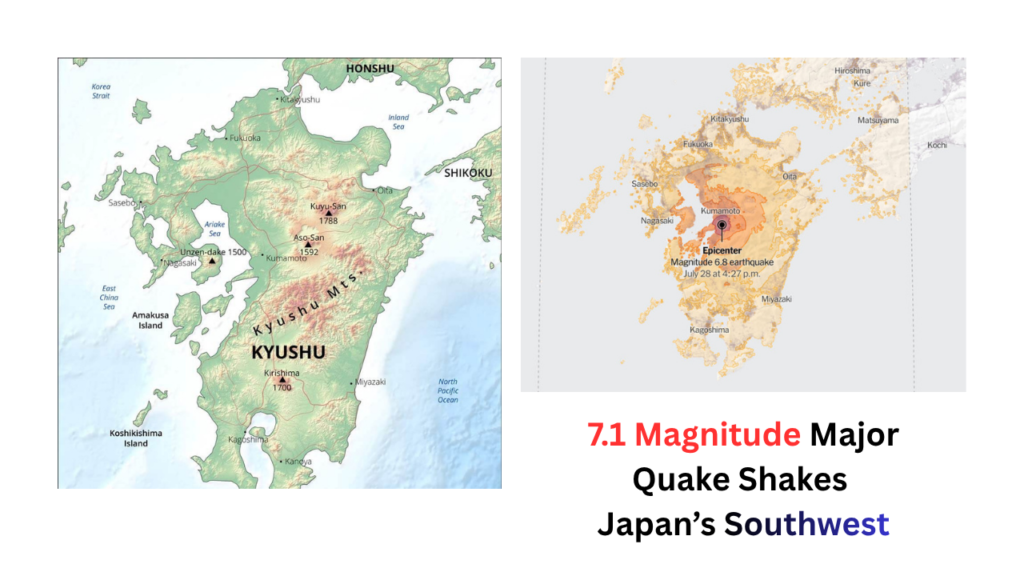
On the afternoon of July 28, 2026, a powerful earthquake struck Kumamoto Prefecture on Japan’s southern island of Kyushu. Initial readings put the magnitude around 7.1, later revised by some agencies to 6.8, with the shaking reaching the highest level on Japan’s intensity scale in the hardest-hit areas. The quake’s epicenter was shallow, only around 10 kilometers deep, which tends to make surface shaking more intense.
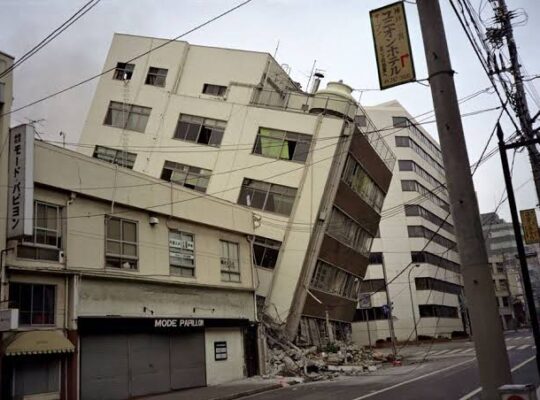
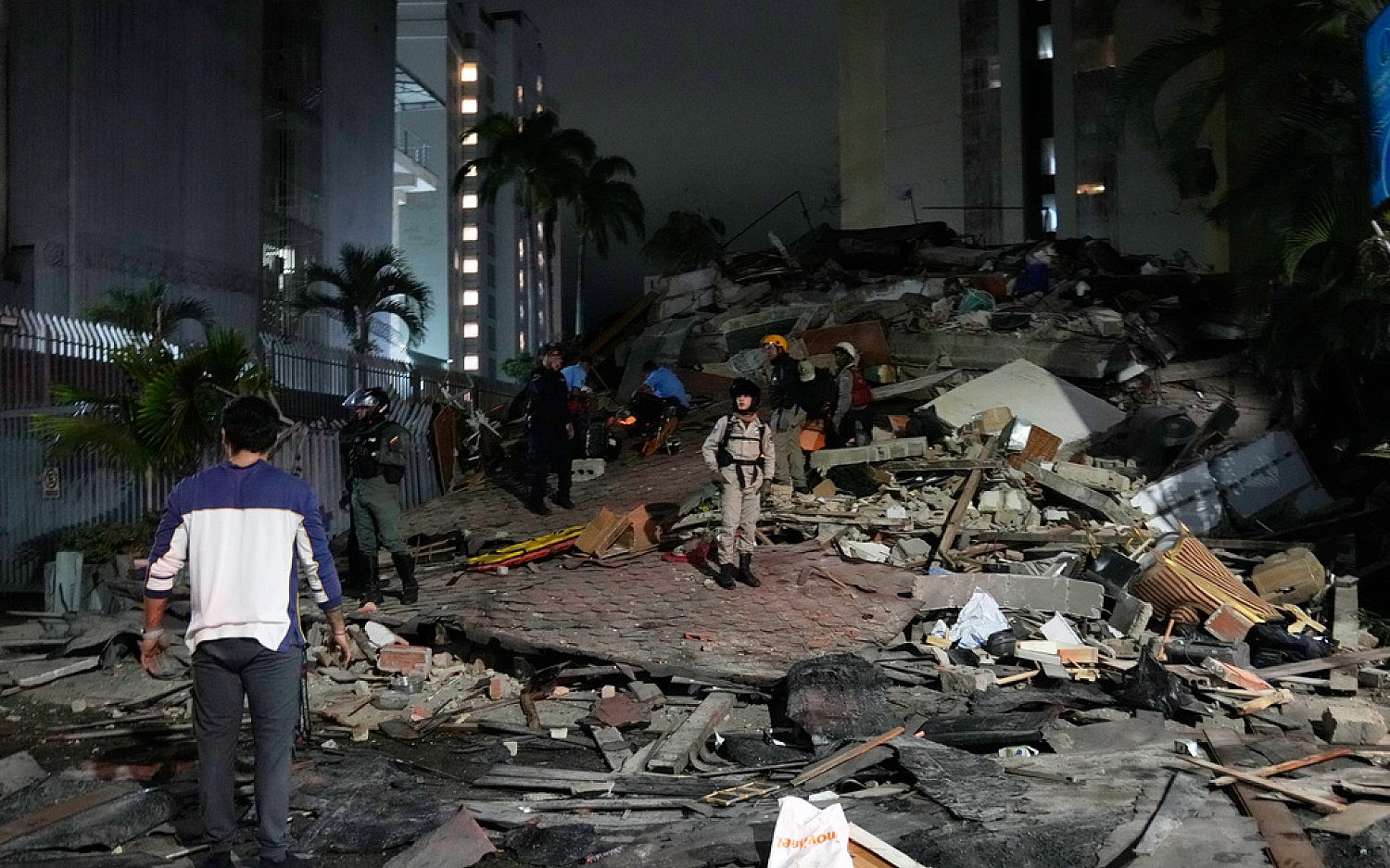
The damage was immediate and visible. In Kashima Town, the second floor of a shopping mall collapsed, trapping people inside, and rescue crews began search-and-rescue operations soon after. Local reports described a possible explosion at the site shortly before the collapse. Elsewhere, footage showed a derailed cargo train, damage to industrial facilities, a building fire, and collapsed walls and storefronts across Kumamoto City.
A tsunami advisory was issued for the nearby coastline, warning of waves up to about a meter, and Japan’s Prime Minister urged residents to stay away from the shore. The advisory was lifted within a couple of hours after no significant wave materialized. Authorities asked roughly 300,000 residents in Kumamoto Prefecture to move to evacuation centers as a precaution.
This isn’t unfamiliar ground for the region — Kumamoto was hit by a deadly sequence of earthquakes in 2016 that killed more than 50 people and damaged tens of thousands of homes, so many residents and officials in the area have lived through this kind of event before.
What It Looks Like on the Ground
Local broadcasters stayed on air through the shaking itself. One newsroom rocked so violently that staff struggled to stay standing, yet reporters kept working, calmly describing the situation to viewers and reminding them that aftershocks were likely to continue. That’s a small but telling detail: even in the middle of a live, ongoing quake, the instinct was to keep informing and reassuring the public rather than panic.
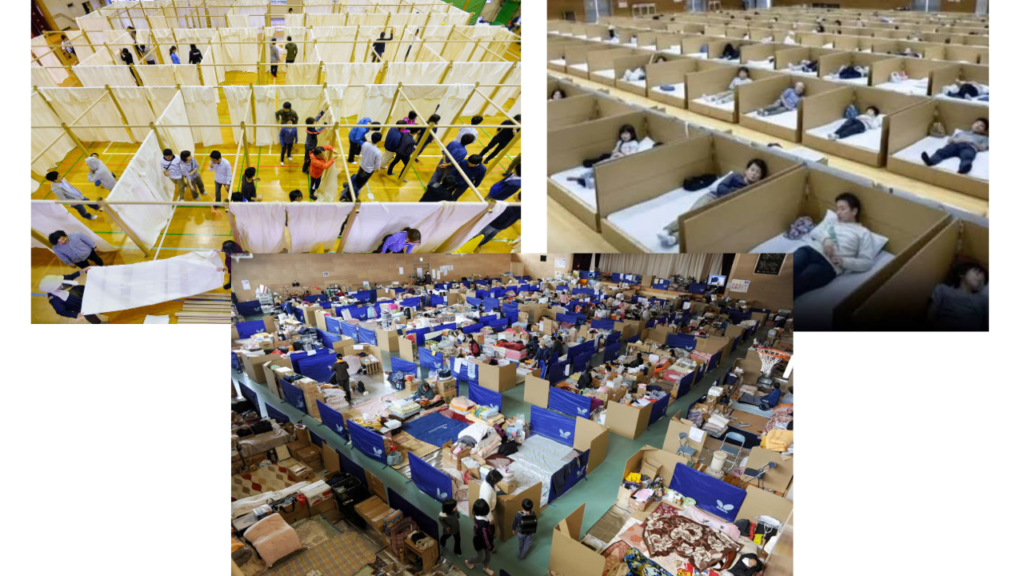
Search-and-rescue teams, including dispatched military aircraft, moved quickly to the mall collapse site. Fire crews worked to contain a building fire visible in aerial footage. Evacuation centers opened across the prefecture, with residents — including families, elderly people, and those with nowhere else to shelter — moving calmly through practiced routines: checking in, finding a space, waiting for updates.
Why the Japanese Response Tends to Look So Composed
To an outside observer, it can look almost surreal: a country gets hit by a major earthquake, and within hours, trains are being inspected for restart, shelves are already being restocked in some areas, and people are lining up in orderly rows at evacuation centers. That composure isn’t indifference — it’s the product of decades of lived experience and deliberate national preparation.
A few things shape this:
- Earthquakes are simply part of life in Japan. The country sits on the boundary of four tectonic plates and experiences thousands of quakes a year. Most people have felt dozens of small tremors in their lifetime and been through earthquake drills since elementary school.
- Building codes are among the strictest in the world. After major quakes like the 1995 Kobe earthquake and the 2011 Tōhoku earthquake and tsunami, Japan repeatedly tightened seismic building standards, which is a major reason modern structures often survive shaking that would level older or less-regulated buildings elsewhere.
- Community drills are routine, not occasional. Schools, workplaces, and neighborhoods regularly run earthquake and tsunami evacuation drills, so when a real event happens, the response is closer to muscle memory than improvisation.
- Public messaging is fast and specific. Earthquake early-warning systems can give seconds of notice before strong shaking arrives — enough time to duck under a desk or step away from a window — and official channels quickly communicate tsunami advisories, evacuation instructions, and safety reminders.
Why the Mindset Matters as Much as the Preparation
Here’s the part that’s easy to miss if you’ve never lived somewhere seismically active: it’s not really any single earthquake that builds resilience — it’s the accumulation of many of them over a lifetime, absorbed one at a time.
For many residents of Kumamoto, this isn’t their first major quake, and it likely won’t be their last. That repetition could easily produce fear or fatalism. Instead, it tends to produce something closer to steady, practiced calm — an attitude that says: this is a known risk, we have a plan for it, we’ve been through worse, and we’ll get through this too.
That’s not the same as pretending a disaster isn’t serious. People are injured, homes are damaged, and communities face real loss. But there’s a meaningful difference between facing a hazard with dread and facing it with preparation and composure. The second version doesn’t erase the danger — but it changes how people move through it, and it’s a big part of why recovery in disaster-prone regions of Japan tends to be fast and organized rather than chaotic.
There’s a broader lesson in that for anyone thinking about disaster preparedness, wherever they live: readiness isn’t just physical (kits, straps, evacuation routes) — it’s also mental. Knowing what to do, having practiced it, and trusting that a plan exists all reduce the paralysis that panic causes. That combination — practical preparation plus a steady mindset — is arguably the most exportable lesson from how Japan handles this recurring reality.

If you missed it, Part 1 of this series covers the science of why earthquakes happen, what hazards to watch for, step-by-step safety guidance, and product suggestions for building your own earthquake preparedness kit.