
Types, the current recall, why we can’t quit it, what it’s doing to your gut, and what might replace it.

Bacon just got recalled again. Not the first time, won’t be the last, but this one’s worth actually reading about instead of scrolling past — partly because it’s a good excuse to talk about something most bacon lovers never think about: what’s actually in the pack, why we can’t stop buying it, and what it’s quietly doing to your body every time you eat it.
The Recall You Should Know About
On July 24, 2026, the USDA’s Food Safety and Inspection Service issued a Class I recall — their most serious category — for about 12,036 pounds of smoked bacon from Maple Leaf Foods. Class I means there’s a real chance the product could cause serious health problems, not just a minor labeling mix-up.
Here’s the twist: this recall isn’t about contamination. The bacon came into the U.S. from Canada without going through required import reinspection — basically, a paperwork and process failure, not a case of tainted meat. No illnesses have been reported so far.
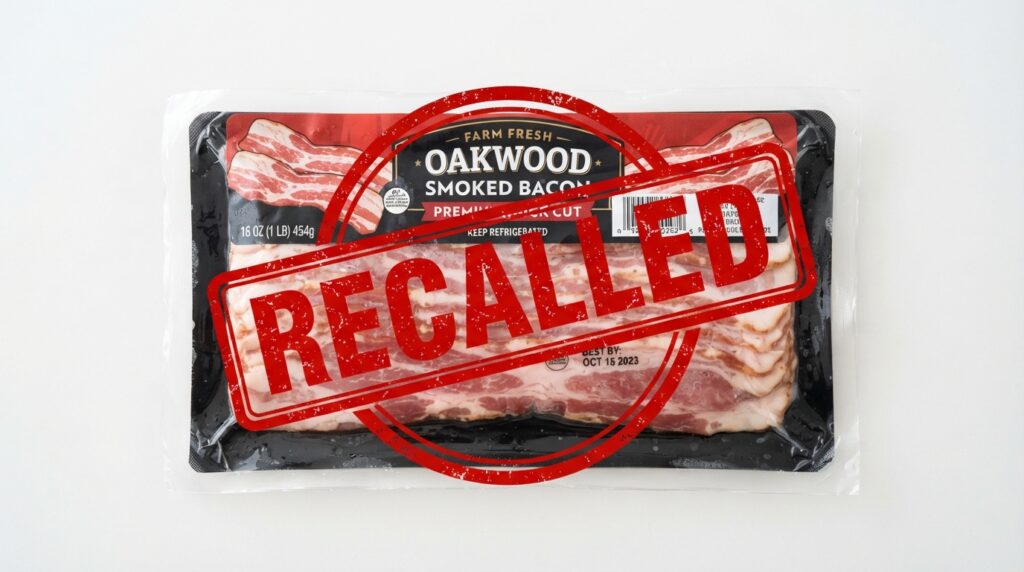
Two specific products are affected, both 12-ounce vacuum packs with September 2026 sell-by dates:
- Royale Natural Applewood Smoked Uncured Bacon (Product of Canada)
- Top Valu Uncured Hardwood Smoked Bacon (Product of Canada)
Both carry the Canadian establishment number “EST. 1” and were sent to Grocery Outlet stores and distributors in Idaho, Oregon, and Washington. If you’ve got either of these sitting in your fridge, check the sell-by date before you cook it.
Not All Bacon Is the Same Thing
Half the confusion around bacon comes from the fact that “bacon” isn’t really one product — it’s a whole category:
- Streaky bacon — the classic American cut, sliced from the pork belly, heavy on fat marbling and flavor.
- Back bacon — the Irish/Canadian style, leaner, cut from the loin with just a bit of belly fat attached.
- Turkey bacon — ground and seasoned turkey pressed into strips, usually marketed as the “lighter” option.
- Beef or lamb bacon — cured and smoked cuts from non-pork animals, popular with people avoiding pork for religious or dietary reasons.
Recalls tend to hit whichever type had a processing or inspection slip-up, not a specific “type” that’s inherently riskier. This particular one happened to hit an uncured, imported smoked bacon; the Kraft Heinz turkey bacon recall from 2025, by contrast, was a listeria contamination issue affecting nearly 368,000 pounds — a completely different kind of problem, at a much bigger scale.
Why We’re All a Little Obsessed With It
There’s a reason bacon shows up on burgers, in ice cream, wrapped around dates, stuffed into cocktails — it’s not just marketing. Bacon hits three flavor notes humans are wired to crave all at once: salt, smoke, and fat. That combination lights up the brain’s reward pathways in a way few other foods manage on their own.
Curing also concentrates amino acids into a heavy dose of umami — the “savory” fifth taste — which is part of why bacon makes almost anything it touches taste better. Add two decades of bacon-wrapped everything, bacon-flavored novelty products, and bacon becoming a personality trait on the internet, and you’ve got a food that’s less “breakfast side” and more cultural shorthand for indulgence.
What It’s Actually Doing to You
Here’s the part that doesn’t make it onto the bacon-wrapped burger menu.
Your gut and your mood are more connected than you’d think. Your digestive tract produces a large share of your body’s serotonin, and it stays in constant contact with your brain through the vagus nerve. Diets heavy in processed meat tend to shift your gut microbiome away from the beneficial bacteria that keep that whole system balanced — which means a bacon-heavy diet isn’t just a “gut” issue, it can quietly show up as mood, anxiety, or mental fog over time.
The World Health Organization classifies processed meat — bacon included — as a Group 1 carcinogen, the same category as tobacco in terms of the strength of evidence linking it to cancer (not the same level of risk, just the same confidence that a link exists). The main culprit is nitrites, added during curing to preserve color and block bacteria, which convert into nitrosamines when cooked at high heat — compounds with a well-documented cancer link.
On top of that, the sodium and saturated fat combination in bacon is hard on blood vessels over time, contributing to stiffened arteries and higher blood pressure.
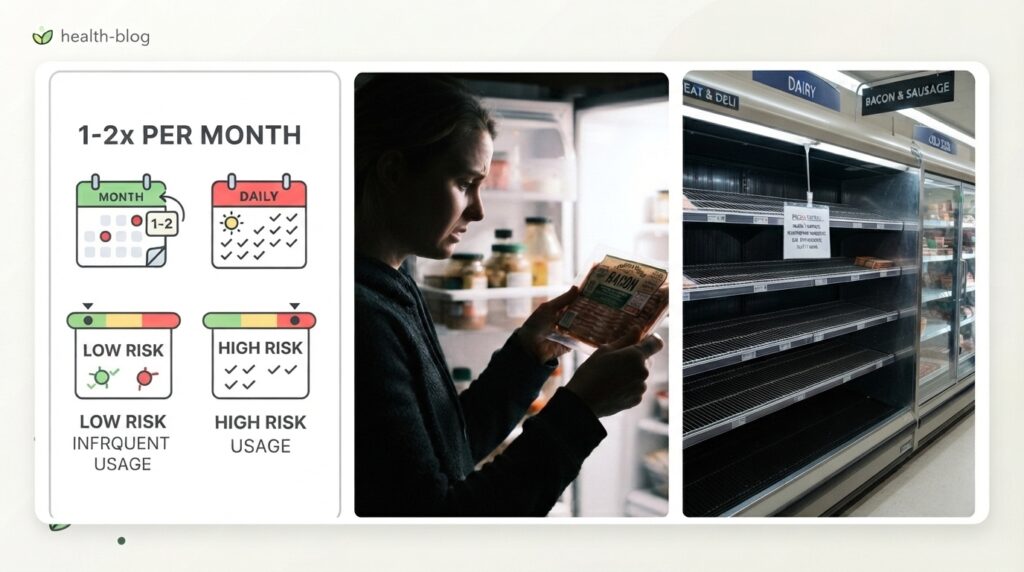
None of this means one BLT is going to hurt you. It means the “daily bacon habit” is doing more than the “occasional bacon treat” — and the gap between those two matters more than people usually assume.
Buying Smarter Without Giving It Up Entirely
If quitting isn’t the plan, buying smarter is a reasonable middle ground:
- Read past the marketing. “Naturally smoked” beats “smoke flavoring,” which usually signals cheaper processing shortcuts.
- Check for the inspection stamp. A visible USDA or country-of-origin mark matters more than the brand name.
- Actually check for recalls. The FSIS recall page lets you match package codes if you’re in a state that received a flagged batch — a two-minute habit that’s easy to skip until it matters.
- Think in frequency, not guilt. A couple of times a month keeps the health risk low and manageable. Daily use is where the long-term cost — both medical and financial — starts adding up.
What Comes After Bacon
If you’re not ready to give up the flavor but want to dodge the downsides, the alternatives have actually gotten good:
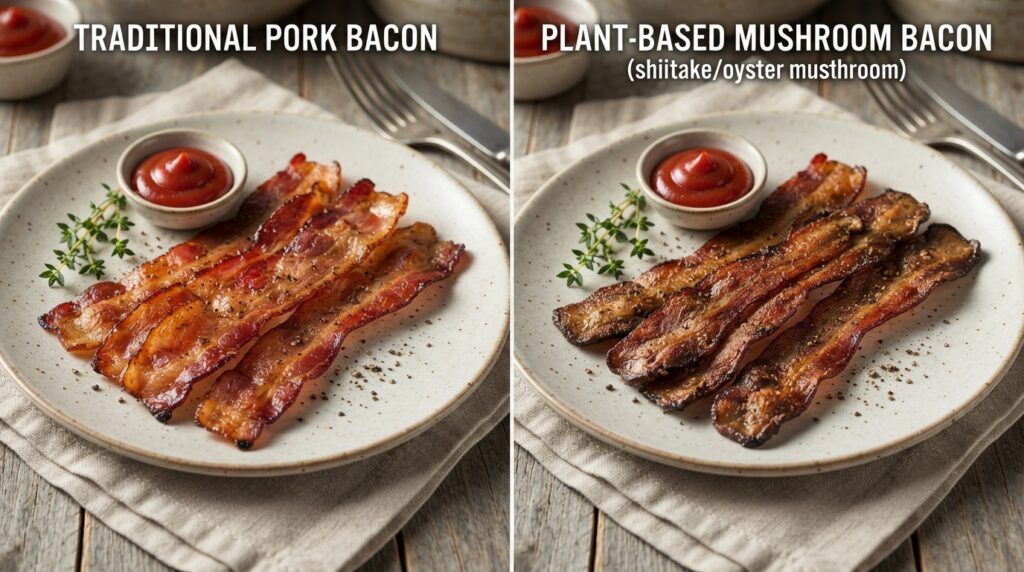
- Mushroom, soy, or seitan-based plant bacon — modern versions genuinely nail the crisp texture and smoky profile now, without the nitrites or the Group 1 carcinogen label attached.
- Cultured (lab-grown) pork — scientists are getting closer to growing real pork fat and muscle tissue in bioreactors rather than raising and slaughtering animals for it.
The appeal of the cultured route isn’t just ethical — it’s practical. Lab-grown meat sidesteps livestock disease outbreaks entirely and dramatically cuts the contamination risks (listeria, salmonella) that trigger recalls like this one in the first place. That’s the real long game here: a food supply that’s more predictable, with far fewer surprise Class I recalls landing in your grocery store’s meat aisle.
The Bottom Line
Bacon isn’t going anywhere, and honestly, it doesn’t need to. But knowing which type is in your fridge, what a Class I recall actually means, what the daily habit is doing to your gut and your risk profile, and what’s coming next in the plant-based and lab-grown space — that’s the difference between eating it on autopilot and eating it on purpose.

This piece covers a real, active USDA recall (as of July 2026). If you have any of the listed products in your fridge, check the FSIS website directly for the most current recall status before consuming.