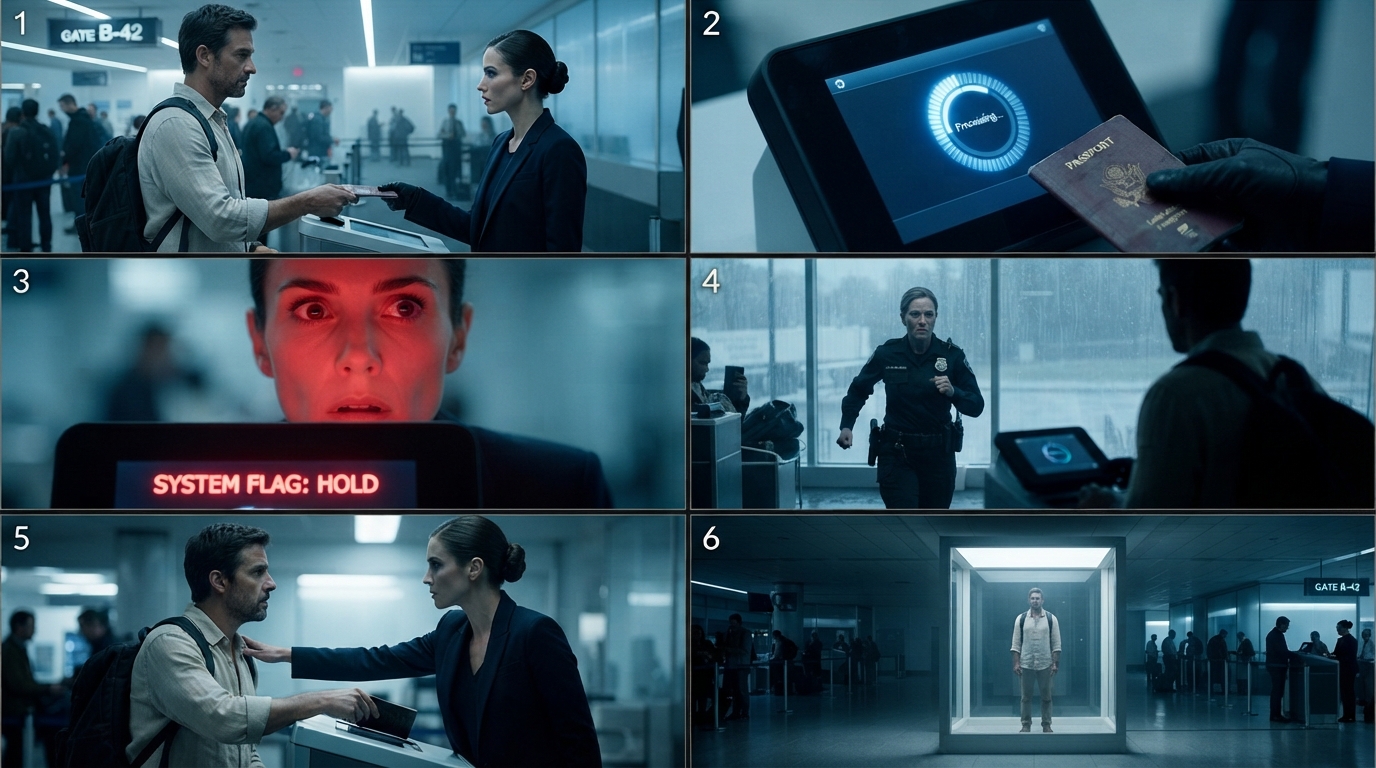
What’s actually happening at U.S. airports right now, why it’s happening, and what it means going forward.

It Used to Be Simple
Show your ID. Walk through the scanner. Find your gate. For most domestic travelers, that was the whole ritual — no different in Ohio than in California, no reason to think twice about it.
That’s changed. Over the past year or so, a growing number of travelers have found out the hard way that boarding a domestic flight can now put them face to face with immigration enforcement — not at the security checkpoint, but right at the gate, sometimes on the jet bridge itself.
This isn’t a rumor or a one-off story. It’s a documented shift in how two federal agencies — the TSA and ICE — now work together, and it’s already changed what boarding a plane can look like for thousands of people.
What’s Actually Happening on the Ground
The pattern that’s emerged from reporting and viral videos over the past several months looks fairly consistent: officers, often in plain clothes, wait near the gate rather than the main checkpoint, and approach a specific traveler just as boarding starts.
A few incidents have made this visible to the public in a way that statistics alone don’t:
- In Las Vegas this July, plainclothes agents attempted to detain a passenger near an elevator in the terminal. The moment turned into a scene — other travelers stepped in, questioned what was happening, and someone caught it on video, which then spread widely online.
- In Denver, a Southwest passenger was pulled off a jet bridge and walked out onto the tarmac in front of a plane full of people about to board.
- Earlier this year, ICE agents were deployed to airports nationwide, originally framed as help with TSA staffing shortages during a government shutdown — but travelers and reporters noticed the agents’ presence extended well past just staffing gaps.
The common thread in almost every account: total surprise. People are traveling for ordinary reasons — a family visit, a work trip — and have no idea their flight has already flagged them before they ever reach the gate.
How People React
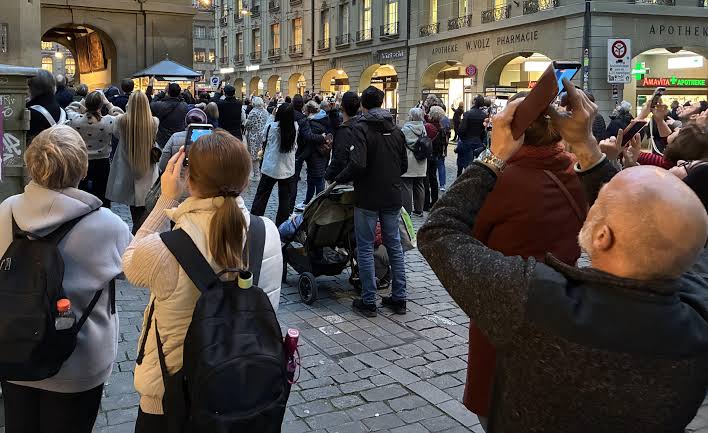
The reaction from other passengers is almost always some mix of confusion, anger, and instinct to document. Bystander video has become the main way the public even finds out these incidents happen — a fellow traveler pulls out their phone, and within hours it’s circulating on social media.
Some travelers intervene directly, asking agents for identification or questioning the legality of what’s happening in real time — which isn’t surprising, since plainclothes officers can be hard to distinguish from anyone else in the terminal, and most passengers have no clear sense of what their rights or the agents’ authority actually look like in that moment.
For flight crews and gate staff, it usually just means delays: boarding stalls, connecting passengers get anxious about missing flights, and an already stressful part of air travel gets a lot more stressful for everyone standing nearby, not just the person being detained.
How the Tracking Actually Works
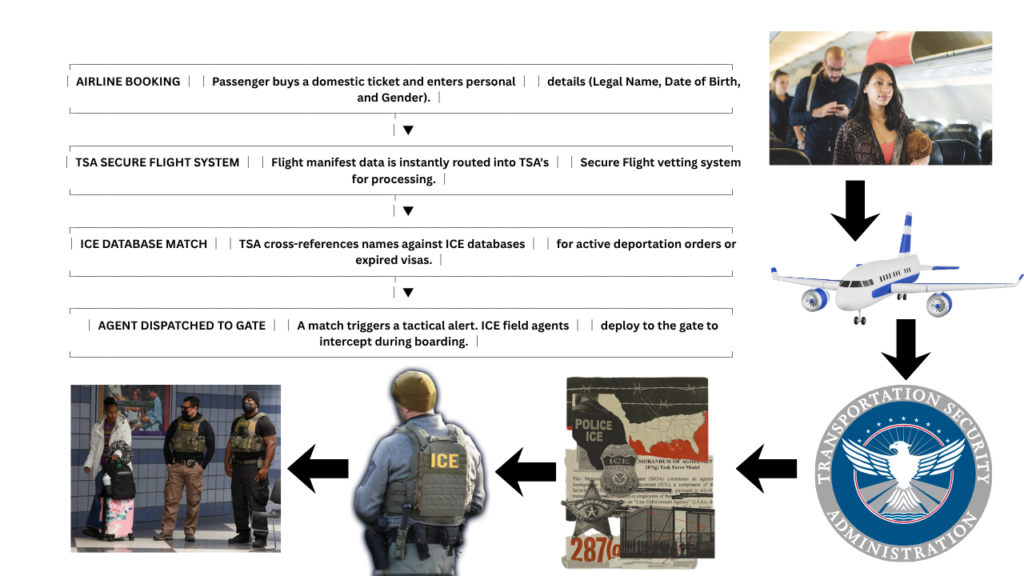
None of this happens by accident — it runs through a specific data pipeline that most travelers have never heard of:
- You book a flight. Airlines generate a Passenger Name Record with your legal name, birth date, and other identifying details.
- TSA’s Secure Flight system checks it. This system was built in 2007 for counterterrorism watchlist screening — checking names against no-fly lists, not immigration status.
- The list gets compared against ICE’s records. If a traveler’s name matches someone with a final removal order or a lapsed visa, that match gets flagged.
- ICE gets the flight details. Because a match includes the flight number, gate, and timing, field agents can be positioned at the right gate before the passenger even arrives.
According to internal ICE data reviewed by Reuters, TSA supplied ICE with records on more than 31,000 travelers between the start of the current administration and February 2026, and more than 800 arrests followed from those tips. Reuters noted it couldn’t confirm how many of those arrests happened inside the airport itself, since the TSA tips are mainly useful for knowing when and where someone will be traveling.
TSA and ICE Aren’t the Same Agency — Here’s the Difference
A lot of the confusion at these incidents comes down to travelers not knowing which agency does what:
| TSA | ICE | |
|---|---|---|
| What it’s actually for | Screening for physical security threats at checkpoints | Enforcing immigration law and executing removal orders |
| What it can do | Check ID, search bags, deny boarding if identity can’t be verified | Detain someone with an active removal order or unresolved status, execute administrative warrants |
| What it can’t do (on its own) | Determine or enforce immigration status | Bypass TSA’s security screening role |
The two agencies technically have separate jobs. What’s new is that they now share a parent department (DHS) and a data pipeline that lets one agency’s routine screening information feed directly into the other’s enforcement operations — something that wasn’t really the design of Secure Flight when it was created for post-9/11 watchlist screening, not general immigration enforcement.
The Two Sides of the Argument
This is genuinely a contested policy question, and it’s worth hearing both.
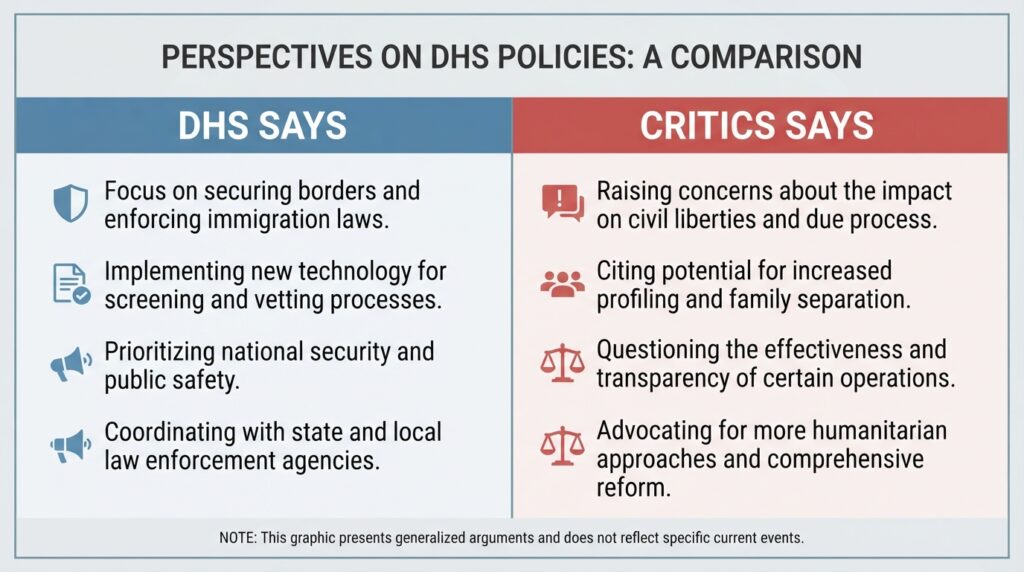
The government’s position: DHS has defended the practice, saying it’s part of a broader push to make sure people with final orders of removal aren’t able to simply fly around the country to avoid enforcement. Officials have said publicly that people detained in these high-profile airport cases were subject to existing legal removal orders — not random checks.
Critics’ position: Groups including the ACLU and the National Immigration Law Center argue this stretches a counterterrorism tool well past its original purpose. Their concern isn’t just about the people with final removal orders — it’s about the broader chilling effect: green card holders, people with pending applications, and travelers with any past contact with immigration court now have reason to wonder if flying domestically could go sideways, even when they haven’t done anything that would normally draw attention.
Some analyses of 2025-2026 arrest data have suggested a meaningful share of those detained in certain regions had no criminal record at all — which is really the crux of the debate: is this a targeted tool for serious cases, or a wide net that catches people well outside that category?
Where This Is Headed
If current statements from DHS are any indication, this isn’t a temporary measure — officials have said the goal is to make sure people without legal status can’t rely on commercial flights to move around the country. That suggests the data-sharing pipeline is more likely to expand than shrink.
What’s already being discussed for the near future:
- Wider data integration — linking flight manifests with state DMV records and commercial data brokers, not just ICE’s existing case files.
- More biometric screening — facial recognition at checkpoints tied directly into these matching systems, rather than name-and-birthdate lookups alone.
- More legal challenges — civil liberties groups are already pushing back in court on using a counterterrorism-era system for routine immigration enforcement, and that fight is likely to continue for a while.
For now, the practical reality is this: the gate isn’t just the last stop before boarding anymore. For a growing number of travelers, it’s become a place where two very different federal systems — airport security and immigration enforcement — quietly meet, often without anyone in the terminal knowing it’s happening until it does.
This is a fast-moving and legally contested area of policy. Details, arrest figures, and legal outcomes may continue to change as court cases and further reporting develop — worth double-checking current sources before republishing specific numbers.