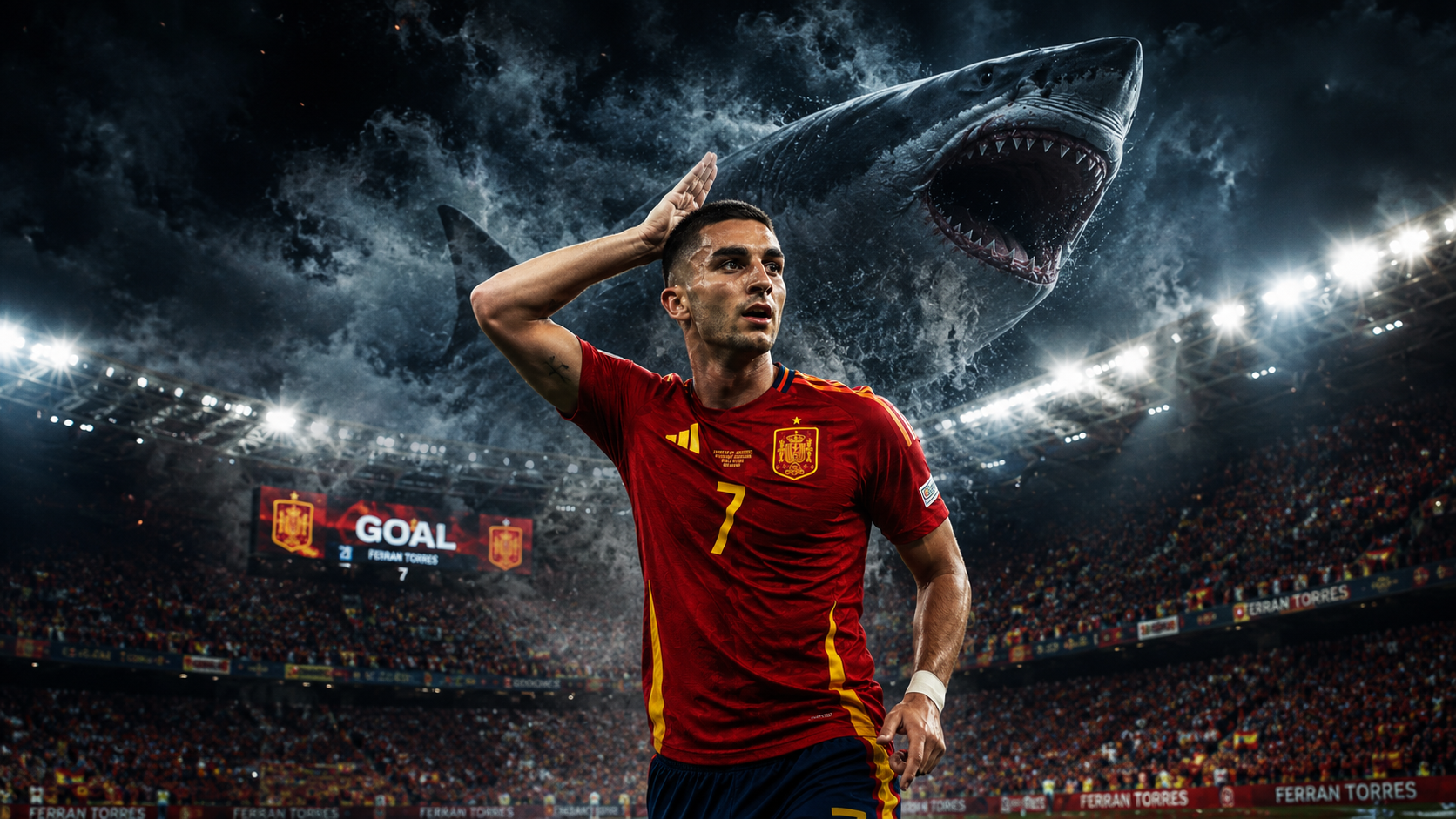
Sunday night at MetLife Stadium was supposed to belong to Lionel Messi one last time, or to Spain’s teenage sensation Lamine Yamal picking up the torch. Instead, it belonged to a guy who started the game on the bench.
In the 106th minute of extra time — deep into a final that had gone 105 minutes without a single goal — Ferran Torres pounced on a bouncing ball inside the box and buried it low into the corner past Argentina’s Emiliano Martínez. 1-0. Full time. Spain, world champions again.
A Final Decided by Almost Nothing
This wasn’t a shootout of a game. Spain dominated possession and shot count for the better part of two hours and simply couldn’t find the net — Martínez was a wall. Argentina, for its part, barely got a sniff: no shots on target, no corners, next to no time in Spain’s box. It took extra time, a substitute, and one clean strike to break a genuine stalemate.
Torres had actually come close earlier — a header off a Yamal cross that Martínez somehow kept out. When his moment finally came in extra time, he didn’t waste it.
Asked about the goal afterward, Torres brushed off individual credit, framing it as something the whole country scored together — not a line worth quoting verbatim, but the sentiment was clear: this one belonged to Spain, not just to him.
Why This Matters More Than “Spain Wins Cup”
A few numbers make this final bigger than a single scoreline:
- Spain allowed just one goal across all eight matches of the tournament — a new World Cup record for fewest goals conceded by a champion.
- This is Spain’s second World Cup title, echoing their breakthrough in 2010.
- Spain now holds both the men’s and women’s World Cup simultaneously — after the women’s team won in 2023 — making Spain the first country in history to hold both at once.
- For Messi, this was reportedly the final World Cup appearance of his career, closing his story with a runner-up medal instead of the fairytale ending.
The Substitute Storyline
What makes Torres’ goal land differently is the setup: he wasn’t a starter. He was a second-half change, brought on to chase a goal that wasn’t coming. That’s a different kind of pressure than starting the final — you get fewer touches, less time to find rhythm, and usually one real chance to matter. He got his chance in the 106th minute and didn’t blink.
It’s also worth noting the shirt number: Torres wore Spain’s No. 7 — the number long associated with Andrés Iniesta, who scored Spain’s winning goal in the 2010 final. Sixteen years later, a different player wearing that number delivered the same result, in extra time, in a World Cup final. Spain fans will be making that comparison for a while.
What’s Next
Expect transfer chatter to heat up fast — that’s what happens to a Barcelona forward who just scored a World Cup-winning goal with a year left on his contract. I’d hold off on repeating specific club rumors until they’re actually confirmed by reporters covering the negotiations directly; the silly season tends to invent as much as it reports.
For now, the story is simpler than any transfer saga: a player who came off the bench delivered the goal that made his country world champions for the second time — and did it wearing the same number as the last man who did it.